The biological functions of carbonic anhydrase and carboxypeptidase A, respectively, are
Ainterconversion of COX2 and carbonates, and hydrolysis of peptide bond
Bgene regulation and interconversion of COX2 and carbonates
Cgene regulation and hydrolysis of peptide bond
Dinterconversion of COX2 and carbonates and gene regulation
Show answer and explanation
Answer: A. interconversion of COX2 and carbonates, and hydrolysis of peptide bond
Carbonic anhydrase is a zinc metalloenzyme that catalyzes the reversible interconversion of COX2 and bicarbonate/carbonate ions. Carboxypeptidase A, also a zinc enzyme, functions as an exopeptidase that catalyzes the hydrolysis of C-terminal peptide bonds in polypeptides. Options containing gene regulation (such as D and B) are incorrect because gene regulation is mediated by zinc finger motifs rather than these hydrolytic enzymes.
The Fe−NXporphyrin bond distances in the deoxy- and oxy-hemoglobin, respectively, are
A∼2.1 and 2.0A˚
B∼2.0 and 2.0A˚
C∼2.2 and 2.3A˚
D∼2.3 and 2.5A˚
Show answer and explanation
Answer: A. ∼2.1 and 2.0A˚
In deoxy-hemoglobin, Fe(II) is high-spin (t2g4eg2) with occupied antibonding eg orbitals, giving it a larger radius that sits displaced out of the porphyrin plane with longer Fe−NXporphyrin bonds of ∼2.1A˚. Upon oxygenation, the iron becomes low-spin (eg0), shrinking in size and pulling into the porphyrin hole to shorten the Fe−NXporphyrin bonds to ∼2.0A˚. Option B incorrectly assumes the bond distances remain unchanged across this spin-state transition.
The binding modes of NO in 18 electron compounds [Co(CO)X3(NO)] and [Ni(ηX5-Cp)(NO)], respectively, are
Alinear and bent
Bbent and linear
Clinear and linear
Dbent and bent
Show answer and explanation
Answer: C. linear and linear
In neutral electron counting, Co has 9 valence electrons and three CO ligands donate 6, totaling 15 electrons; to satisfy the given 18-electron count, NO must donate 3 electrons, adopting a linear binding mode. Similarly, Ni provides 10 valence electrons and η5-Cp contributes 5 (total 15), so its NO must also donate 3 electrons and be linear. Options A and B fail because a bent NO donates only 1 electron, yielding an electron-deficient 16-electron complex.
The role of copper salt as co-catalyst in Wacker process is
Aoxidation of Pd(0) by Cu(II)
Boxidation of Pd(0) by Cu(I)
Coxidation of Pd(II) by Cu(I)
Doxidation of Pd(II) by Cu(II)
Show answer and explanation
Answer: A. oxidation of Pd(0) by Cu(II)
In the catalytic cycle of the Wacker process, Pd(II) oxidizes ethylene to acetaldehyde and is reduced to Pd(0). Cu(II) acts as a co-catalyst to regenerate the active catalyst via the redox reaction Pd(0)+2Cu(II)Pd(II)+2Cu(I), with Cu(I) subsequently re-oxidized by molecular oxygen. Option B is incorrect because Cu(I) is the reduced form and cannot oxidize Pd(0).
For typical Fischer and Schrock carbenes, consider the following statements A. Oxidation state of metal is low in Fischer carbene and high in Schrock carbene B. Auxilliary ligands are π-acceptor in Fischer carbene and non-π-acceptor in Schrock carbene C. Substituents on carbene carbon are non-π-donor in Fischer carbene and π-donor in Schrock carbene D. Carbene carbon is electrophilic in Fischer carbene and nucleophilic in Schrock carbene The correct statements are
AA, B and C
BA, B and D
CB, C and D
DA, C and D
Show answer and explanation
Answer: B. A, B and D
Fischer carbenes feature low-oxidation-state metals with π-acceptor auxiliary ligands (like CO) and an electrophilic carbene carbon, whereas Schrock carbenes feature high-oxidation-state early transition metals with non-π-accepting ligands and a nucleophilic carbon, making A, B, and D correct. Statement C is reversed because Fischer carbenes require π-donor substituents (such as −OMe or −NRX2) to stabilize the carbene carbon, whereas Schrock carbenes bear non-π-donors (such as −H or alkyl groups), ruling out options A, C, and D.
The species having the strongest gas phase proton affinity among the following,
ANX3−
BNFX3
CNHX3
DN(CHX3)X3
Show answer and explanation
Answer: A. NX3−
Gas-phase proton affinity corresponds to the energy released upon binding a proton, B+HX+BHX+. Negatively charged species attract a proton far more strongly than neutral species via intense coulombic attraction, and the trianion NX3− has an extraordinarily high negative charge density, yielding an enormous proton affinity. Although N(CHX3)X3 (D) has the highest proton affinity among the neutral molecules due to alkyl electron donation, it is vastly weaker than the ionic species.
Consider the following statements regarding the diffusion current at dropping mercury electrode A. It does not depend on mercury flow rate B. It depends on drop time C. It depends on temperature Correct statement(s) is/are
AA only
BB only
CA and B
DB and C
Show answer and explanation
Answer: D. B and C
According to the Ilkovic equation, the diffusion current is given by id=607nD1/2m2/3t1/6C, showing a direct dependence on drop time t (making B correct) and mercury flow rate m (making A false). The diffusion coefficient D is also strongly temperature-dependent, causing id to vary with temperature (making C correct). Option C fails because statement A incorrectly claims independence from the mercury flow rate.
Q value for the reaction 13N(n,p)13C is 3.236 MeV. The threshold energy (in MeV) for the reaction 13C(p,n)13N is
A−3.236
B−3.485
C3.485
D3.845
Show answer and explanation
Answer: C. 3.485
For the endoergic reverse reaction 13C(p,n)13N, Q=−3.236 MeV. The threshold energy is Eth=∣Q∣(1+mtargetmp)=3.236×(1+131)=3.236×1314=3.485 MeV. Option B is incorrect because threshold kinetic energy must always be positive.
The 119Sn NMR chemical shift (approximately in ppm) corresponding to (η5−Cp)2Sn (relative to MeX4Sn) is
A−4
B+137
C+346
D−2200
Show answer and explanation
Answer: D. −2200
Stannocene, (η5−Cp)2Sn, is a divalent tin(II) metallocene possessing a stereochemically active lone pair and rings that provide massive shielding, resulting in an extraordinarily high-field 119Sn resonance around −2200 ppm. Typical organotin(IV) compounds resonate in the narrow range from −400 to +200 ppm, so options like (A) or (B) correspond instead to conventional tetrahedral Sn(IV) species.
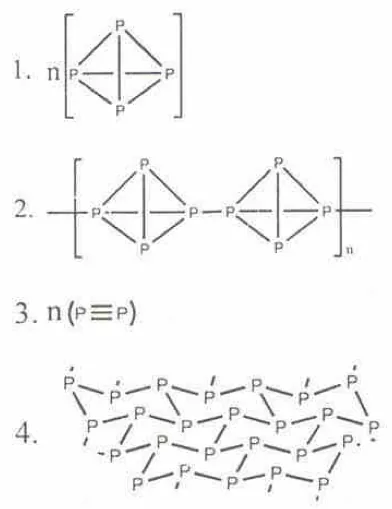
Upon melting, the polymeric networks of red or black phosphorus break down into discrete liquid containing tetrahedral PX4 molecules, matching Structure (1). Diatomic PX2 units (Option C) are only formed in the vapor phase at very high temperatures (>800∘C), while the polymeric chain in Structure (2) is characteristic of solid red phosphorus.
131 more questions from this paper are in the app
In the Tatva app you get the whole paper with the real clock and marking, every answer explained, your score, and an AI tutor for each mistake.